

If you've spent the last two days of your period dreading the moment you sit down, you already know what pad rash feels like. The sting along your inner thighs. The itch you can't scratch in public. The redness that lingers for days after your period ends. It's one of those things most women have experienced at some point, yet it gets filed away as just another unavoidable part of having a period.
It isn't. Pad rash is far more preventable than most women realise — and understanding what actually causes it changes the way you think about period care entirely.
What Causes Pad Rash?
Pad rash is medically closer to what's called chafing dermatitis or irritant contact dermatitis. It rarely has a single cause. More often, it's a combination of factors working against your skin at the same time.
Friction is the most direct one. A pad sits on top of your underwear, held in place by adhesive. As you walk, sit, and move throughout the day, it shifts slightly with every motion. That repeated rubbing against the skin — especially along the inner thighs and around the pad's edges — gradually causes irritation.
Moisture makes it worse. Menstrual blood, sweat, and humidity build up against the skin as the day goes on. When skin stays damp for too long, the barrier weakens, and irritation becomes far more likely.
Chemical irritants play a role too. Many conventional pads contain fragrances, dyes, and adhesive components that sensitive skin reacts to directly. For some women, this alone is enough to trigger irritation — even when hygiene isn't the issue.
Heat intensifies all of it. This is why pad rash tends to be more common during Indian summers and in humid cities, where sweat accumulates quickly and doesn't evaporate easily.
What Does Pad Rash Feel Like?
Once you've experienced it, it's usually easy to recognise. Common signs include:
Redness or rawness along the inner thighs, groin, or vulval area. A burning or stinging sensation that gets worse when you walk or sit down. Chafing around the edges of the pad. Skin that feels unusually warm, tender, or sensitive to touch.
Most women notice it appearing around the second or third day of their period, when wear time has accumulated, and moisture has had more time to build up. Mild irritation often settles once the skin gets a chance to breathe — but if it's showing up month after month, your current period product is likely part of the problem.
Can Period Panties For Women Reduce Friction And Moisture Better Than Pads?
In hot and humid weather, sweat doesn't evaporate efficiently. It sits on the skin and mixes with the moisture already trapped beneath a pad, creating a damp environment that can persist for hours. Add the friction of commuting, walking, or simply moving through the day, and irritation becomes almost inevitable for anyone with skin that runs sensitive.
This is a particularly relevant problem across much of India — not just in summer, but through long stretches of the year in coastal and humid regions. The triggers for pad rash aren't occasional here. For many women, they're present every single cycle.
This is where the design difference between pads and period panties for women becomes relevant.
A pad is a separate product attached to underwear by adhesive. That attachment point is exactly where independent movement — and friction — comes from. Every time you shift your weight or take a step, the pad can move slightly against your skin. Over hours, that adds up.
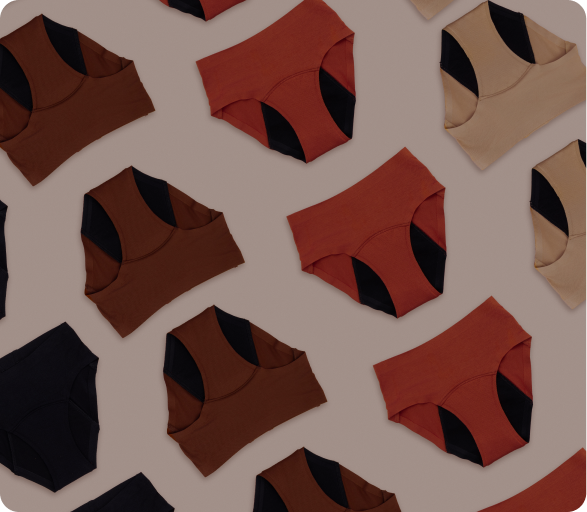
Period panties for women eliminate that separate layer entirely. The absorbent material is built directly into the underwear, which means there's nothing shifting independently against your skin throughout the day. The underwear moves with your body, not against it.
Moisture management works differently, too. Mahina's period panties use a three-layer system: a moisture-wicking top layer that pulls fluid away from the skin, an absorbent core that locks it in, and a leak-proof outer layer that keeps everything contained without trapping heat. The result is a surface that stays noticeably drier against your skin throughout the day. For women whose pad rash is primarily driven by friction and trapped moisture, this difference is significant.
Which Fabrics Matter Most For A Dry, Rash-Free Experience?
Not all rash-free period underwear is built the same, and when it comes to preventing irritation, the fabric that sits directly against your skin matters most. Two materials consistently perform well for breathability and comfort:
Cotton allows air to circulate freely, doesn't feel synthetic against the skin, and is far less likely to cause or worsen irritation. It's a natural choice for the layer closest to your body — particularly for women who have sensitive skin or find certain fabrics uncomfortable during their period.
MicroModal is worth considering if you tend to feel warm or sticky by the middle of the day. It's exceptionally soft, stays light against the skin, and doesn't hold onto moisture the way some fabrics do — which makes a tangible difference in India's humid conditions. If cotton starts to feel heavy or damp on warmer days, MicroModal is the natural step up.
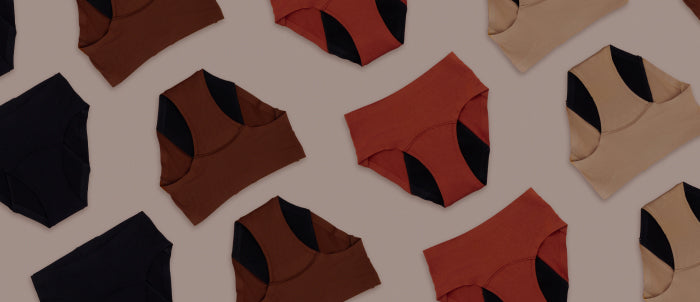
While the skin-touching surface of the absorbent gusset is cotton in all of Mahina’s products, both cotton and MicroModal are available in this range, so you can choose based on what your skin responds better to — or keep both for different days of your cycle.
The broader point is that breathability isn't a bonus feature in rash-free period underwear. It's what separates underwear that genuinely reduces irritation from underwear that simply replaces one source of discomfort with another.
How Long Can Period Panties Be Worn Comfortably?
This depends on the product — and specifically on the absorbency level of the pair you're wearing. Mahina's period panties are designed to be worn for up to 12 hours, which means that one pair sees you through a large chunk of the day without needing a change.
Here's how that maps across absorbency levels: Here's how that maps across absorbency levels in terms of pads:
- Light absorbency: Or a panty liner replacement, this is suitable for your lightest days, spotting or as a panty liner backup. Replaces 4 panty liners used in a 12-hour window.
- Medium absorbency: Comfortable for a day of moderate flow. Replaces roughly 3 pads used in a 12-hour window.
- Heavy absorbency: Built for heavier days, providing long-wear protection. Replaces about 4 pads over a 12-hour window.
- Super Heavy absorbency: For the heaviest flow, when you would normally go through multiple pads quickly. Replaces up to 5 pads in 12 hours.
- Super Heavy Plus absorbency: Mahina DeepSleep Period PantyTM is designed for overnight use. Replaces up to 8 pads in a single wear, providing you with a full night’s protection without needing extra layers, products or stress.
The practical difference from pads isn't just how long you can wear them — it's that the skin stays drier throughout that time. That's what makes the extended wear feel comfortable rather than just convenient.
Are Period Panties Safe For Sensitive Skin?
For women with sensitive skin, the answer comes down to what the underwear is made from and what it's actually been tested against — two things that aren't always the same.
Mahina period panties use OEKO-TEX certified fabrics. This certification confirms that the textiles are free from restricted dyes, chemicals, and harmful substances. Beyond the fabric, every part of Mahina’s period panty that comes in contact with your skin has been tested to be safe in NABL-accredited laboratories. This toxicology testing checks for harmful chemicals such as formaldehyde, heavy metals, and other restricted substances, ensuring the product is safe for long-term wear.
Additionally, Mahina performs bioburden testing after six months of real-world use. This evaluates whether the panty maintains hygiene standards over repeated wear and washing. This transparency ensures that Mahina provides a clear, multi-layered assurance that its period panties are safe, hygienic, and comfortable for sensitive skin.
It's worth knowing what you're comparing this against. Reporting on conventional Indian disposable pads has found undisclosed chemicals and synthetic materials in direct skin contact, with prolonged use causing long-term health issues. For women who experience recurring irritation with no obvious cause, this is often where the answer is.
For sensitive skin in hot and humid conditions, both certifications together give you a clearer picture of what you're actually putting against your body every cycle.
How To Feel Like Yourself During Your Period
Rash-free period underwear is a practical solution to a problem that conventional period products are structurally ill-equipped to solve because friction, trapped moisture, and chemical exposure are built into how pads work, not accidents of a bad batch.
If pad rash keeps showing up every month, it's worth asking whether the product you're using is contributing to it — rather than assuming it's simply part of having a period.
Switching to period panties for women designed with breathable fabrics, an effective absorbent core, and certified safe materials is often enough to make your cycle feel noticeably more comfortable. Not because it's a new category of product to try, but because it addresses the causes directly.
Explore Mahina's range of rash-free period underwear to find your best fit today!
To Sum It Up
Period-related skin irritation, commonly known as pad rash, is a frequent but preventable issue for many women. Friction, trapped moisture, heat, and chemical exposure from conventional pads can lead to itching, redness, and discomfort during menstruation. Breathable period panties, such as Mahina’s range, are designed to reduce these risks by combining moisture-wicking fabrics, layered absorbent cores, and certified safe materials. Their products fit securely, move with the body, and are suitable for extended wear, replacing multiple disposable pads while reducing friction and chemical exposure. For women with sensitive skin, switching to carefully designed period underwear provides both protection and peace of mind, making periods noticeably more comfortable.

Sources
- Medical News Today: What causes menstrual pad rash, and what does it look like?
- Cleveland Clinic: Contact dermatitis
- Healthline: Why do menstrual pads cause rashes?
- Times Of India: Summer period rashes are more common than you think: Doctor shares the hidden causes and simple fixes every woman should know
- Mahina: Cotton vs modal: which period panty feels better?
About The Author