

For the longest time, most of us only glanced at a calendar to make sure our period wouldn’t catch us off guard. It was usually just about knowing when to toss a pad in your bag, stock up on supplies, or brace yourself for cramps.
But your menstrual cycle is so much more than just the days you bleed.
Your hormones are shifting the entire month, not just during your period, and that’s exactly why your cycle can affect you both physically and emotionally well beyond those few days. When you only pay attention to the days you are actively bleeding, you end up missing a lot of the quieter signals your body is sending the rest of the month.
That’s where period tracking really starts to make a difference.
What Period Tracking Actually Means
Honestly, tracking your period is pretty straightforward. It simply means paying attention to your cycle over time, noticing when your period shows up, how long it lasts, and the physical or emotional changes that tend to happen throughout the month.
Hormone levels naturally rise and fall throughout your cycle. This can affect your energy, mood, sleep, appetite, cramps, discharge, and even motivation, all of which can change depending on where you are in your cycle.
That’s a big part of why period tracking becomes so useful over time. Once you start recognising how different phases affect you personally, your cycle usually starts making a lot more sense.
Here’s a general idea of what different phases of the menstrual cycle can feel like:
- Menstrual phase (Days 1 - 5): This is when bleeding begins. Many women feel lower in energy, more emotional, have cramps, or are more tired during this phase because hormone levels are at their lowest.
- Follicular phase (Days 6 - 14): This phase comes after your period ends. You might feel more motivated, mentally clearer, or just more like yourself again as hormone levels begin rising again.
- Ovulation phase (around Day 14): Around ovulation, some women notice subtle changes: more discharge, mild cramps, a shift in appetite, feeling more social, or noticeable changes in mood and libido.
- Luteal phase (Days 15 - 28): This is the phase leading up to the next period, and it is usually when PMS symptoms first appear. Bloating, cravings, acne breakouts, fatigue, headaches, mood swings, or just feeling more emotionally sensitive are all pretty common as hormones start shifting again.
Why Every Woman Should Track Her Period
For many women, periods can feel confusing or unpredictable at times, especially when changes in their cycle seem to happen without warning. But consistent period tracking often helps those patterns become much easier to understand over time.
It can help you:
- Figure out the length of your cycle better (a healthy menstrual cycle is usually between 21 and 35 days).
- Predict periods more accurately.
- Spot your PMS patterns more clearly.
- Notice how stress, sleep, travel, or lifestyle changes affect your cycle.
- Track symptoms like cramps, spotting, bloating, acne, or heavy bleeding.
- Pick up on possible ovulation signs and get a better understanding of your fertility window.
- Walk into doctor’s appointments with clearer answers about hormonal or reproductive health.
- Stock up on the right menstrual products before your period starts.
Over time, period tracking often becomes less about simply predicting dates and more about understanding your body with a lot more clarity and confidence.
How To Start Period Tracking As A Beginner
The easiest place to start is by simply noting down the first day of your period each month. From there, you’ll naturally start noticing other small patterns and changes that show up throughout your cycle, too.
In the beginning, focus on just a few basics:
- The date your period starts and ends.
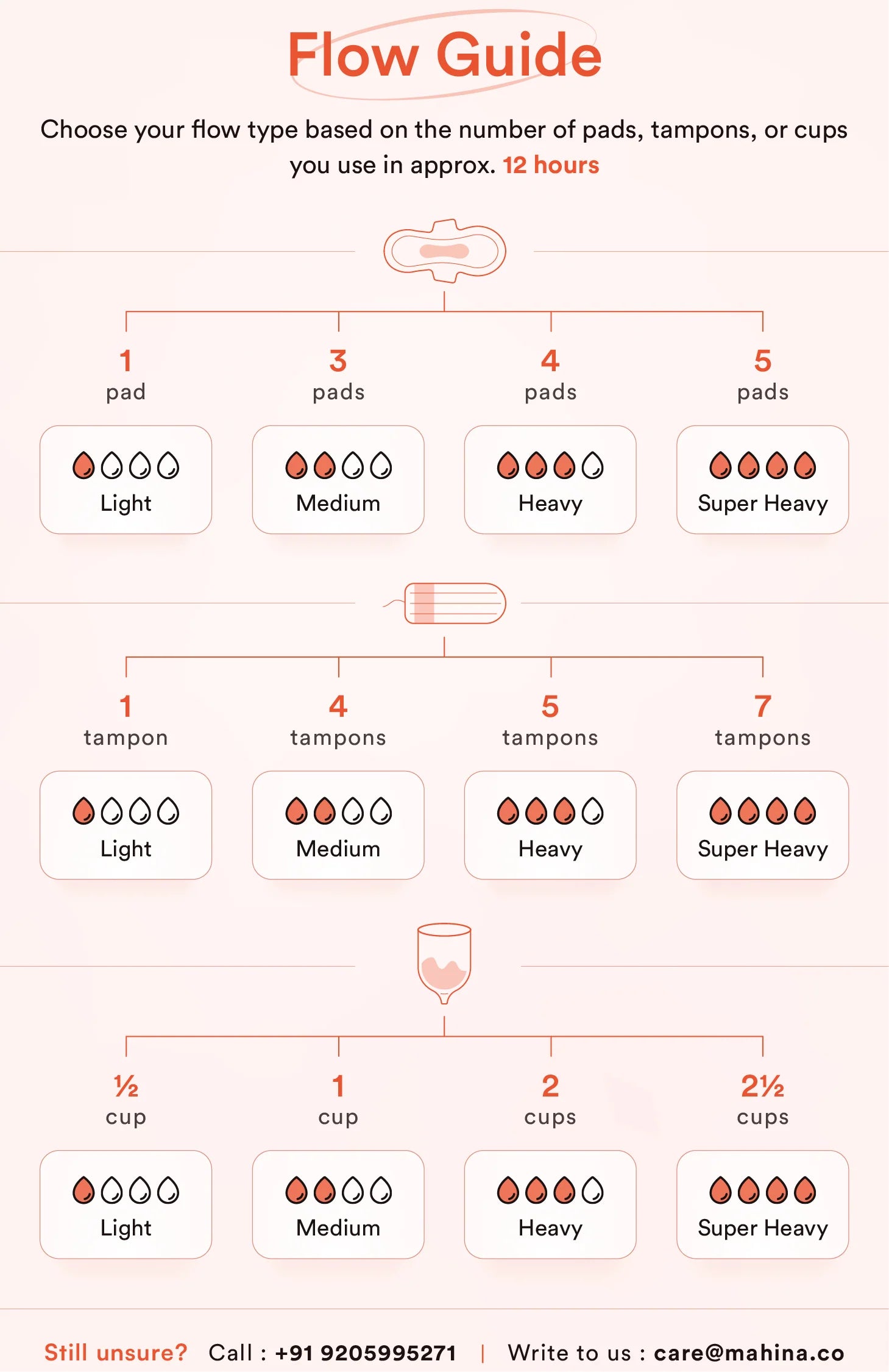
- How heavy or light your flow feels. Try demarcating it with the number of disposable products you use.
- Cramps or recurring PMS symptoms.
- Changes in mood, energy, focus or sleep.
- If you have any spotting between your periods.
You do not need to track every symptom perfectly. The goal is to build consistency over time.
Most women find it easiest to log symptoms once a day rather than trying to remember everything at the end of the month. After two or three cycles, patterns often start becoming much easier to recognise.
There is also no single “best” tracking method. Some women prefer apps because they automatically calculate the length of their cycle, predict upcoming periods, and send reminders. Others prefer using a calendar because it feels simpler and easier to visualise. If you want to track moods, cravings, or symptoms in more detail, journaling works well too.
The best tracking method is ultimately the one you will realistically continue using consistently.
What Women Often Notice Once They Start Tracking Consistently
One of the biggest surprises with period tracking is how many patterns become obvious once you start paying attention.
Many women realise:
- Stress and travel can change the timing of their cycle.
- Lack of sleep affects PMS symptoms.
- Certain foods worsen bloating.
- Fatigue appears before their period every month.
- Ovulation is accompanied by noticeable changes in discharge.
Period tracking can also help women recognise when their cycle is becoming consistently different over time, rather than assuming every delayed or ‘unusual’ period is random.
Can Period Tracking Help Identify Hormonal Imbalances?
While period tracking is useful, it cannot by itself diagnose hormonal conditions like PMOS (formerly known as PCOS/PCOD) or thyroid disorders. But it can make unusual patterns easier to recognise and discuss with a doctor.
For example, tracking symptoms may help women notice:
- Very long gaps between periods.
- Consistently irregular cycles.
- Unusually heavy bleeding.
- Spotting between periods.
- Worsening acne or hair growth alongside cycle changes.
- Fatigue that is persistently difficult to manage on a daily basis.
Doctors often ask about menstrual history when evaluating hormonal concerns, which is why tracked cycle information can actually become medically useful over time.
Making Better Choices With Menstrual Solutions
Tracking your cycle consistently can also make choosing menstrual products much easier. Once you understand your flow patterns better, you can prepare more comfortably for different parts of your cycle instead of constantly getting caught off guard.
Some women realise their flow is consistently heavier during the first couple of days, and they need better overnight protection. Others notice lighter flow towards the end of their period and start preferring softer, more comfortable options instead of bulky disposable products.
At The End Of The Day
Your menstrual cycle carries more information about your health than most women are taught to notice. Once you start tracking consistently, patterns that once felt random often begin making much more sense, and that is really the biggest benefit of period tracking. It helps you understand what is normal for your body, recognise when things change, and feel more informed about your own cycle, rather than constantly surprised by it.
To Sum It Up
Period tracking helps you understand your menstrual cycle beyond just the days you bleed. Hormones fluctuate throughout the month, so your energy, mood, sleep, appetite, cramps, discharge, PMS symptoms, and motivation can all change depending on where you are in your cycle. Tracking your period consistently makes it easier to recognise your personal patterns, predict upcoming periods, understand how stress or lifestyle changes affect your cycle, and notice symptoms that may need medical attention. It can also help you choose menstrual products more confidently because you start knowing which days are heavier, which nights need more support, and when lighter protection may be enough. Period tracking is not about making your cycle feel like homework; it is about understanding what is normal for your body, spotting meaningful changes sooner, and feeling less caught off guard every month.

Sources
- Cleveland Clinic: Menstrual cycle
- Harvard T.H. Chan: Benefits of tracking your period
- Healthline: Everything you should know about hormonal imbalance
About The Author