

For most people, periods and pads have gone hand in hand for as long as they can remember. Pads are familiar, widely available, and easy to find at any pharmacy or supermarket. But they come with a condition: they need to be changed every four to six hours. In real life, that window is easy to miss. Suppose a busy day at the office includes back-to-back meetings that run long, or a full day of classes leaves no room for a quick washroom break. Life often does not pause for a period product, and more often than not, those products end up being used for too long.
What feels like a minor inconvenience is worth taking more seriously. Research has found that many popular disposable pads contain harmful chemicals, including phthalates and volatile organic compounds, and given that the vaginal area is a mucous membrane that absorbs substances at a significantly higher rate, prolonged contact with those chemicals is not something to dismiss.
This is part of what has driven a growing shift towards period underwear. But that shift alone is not enough. Even within period underwear, what the product is made of and how it is constructed determines whether long wear is genuinely safe. That is where breathability becomes the deciding factor.
Why Breathability And Long Wear Hours Go Together
The vulvar area is warm, enclosed, and sensitive. Under normal circumstances, natural airflow keeps the environment balanced. Add a period product that blocks that airflow, and the conditions change quickly. Heat builds. Moisture from flow, discharge, and sweat accumulates. The skin, which is thinner and more reactive in this region, begins to struggle.
Over prolonged wear, not only is this uncomfortable, but it also becomes a health concern. Non-breathable period underwear, much like the plastic-backed pads it is meant to replace, can create a sealed microenvironment that holds moisture against the skin for hours at a stretch. The problem is not just that it feels unpleasant. It is that it sets up exactly the conditions that the body works hard to avoid.
What Are The Risks Of Non-Breathable Period Underwear For 8+ Hours?
Trapped moisture is the common thread behind most period-related skin complaints. When the vulvar area stays damp for extended periods, the natural bacterial balance shifts. Yeast, which thrives in warm and moist environments, can overgrow. Bacterial vaginosis becomes more likely. Skin that is in constant contact with a damp surface develops rashes, itching, and irritation that can persist long after the period has ended.
For people who wear period products through long workdays, travel, or overnight hours, these are not abstract risks. They are the predictable result of the wrong product being worn for too long. Switching to a comfortable period underwear addresses some of this, but only if the underwear itself is designed to let the skin breathe. A non-breathable period underwear in a softer fabric is still a sealed environment. The material matters, but so does the construction.
How Do You Know If Period Underwear Is Truly Breathable?
The word breathable appears on a lot of packaging. It is worth knowing what it actually means in practice.
Breathability in period underwear comes down to two things: the fabric and how the product works. Fabric that allows air to pass through and moisture to move away from the skin is the foundation. But the way those layers are assembled determines whether the underwear actually manages moisture or simply absorbs it and holds it in place.
Mahina's breathable period underwear uses a three-layer system designed specifically for this. The first layer pulls moisture away from the skin, moving it inward rather than letting it sit on the surface. The middle layer, that is the core of the absorbent technology, absorbs and holds it. The outer layer prevents leaks without sealing in heat. The result is that you do not stay damp whilst wearing it. That is what separates genuinely breathable period underwear from the rest.
The Benefits Of Comfortable Period Underwear For Long Days
Once the construction is right, the choice of fabric shapes the experience of wearing it.
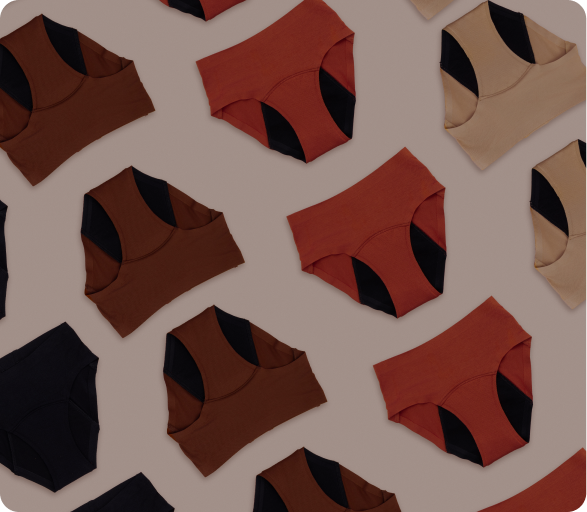
Mahina's comfortable period underwear comes in two fabric options. While the absorbent gusset remains the same in both variants, the fabric of the rest of the underwear helps determine comfort.
The cotton version is naturally breathable, absorbent, and feels just like regular underwear. It is the choice for people who prefer a classic, grounded feel and want the reassurance of a fabric long recommended by gynaecologists for vulvar health.
The MicroModal version has a noticeably smoother and softer feel. It offers a seamless fit and is particularly well-suited for people whose skin reacts to texture or friction over long hours.
Both options are made with OEKO-TEX-certified fabrics, which means the fabrics are free of any harmful dyes and substances. For comfortable period underwear worn against sensitive skin for ten to twelve hours at a stretch, this matters. Soft is not the same as safe, and OEKO-TEX certification is the clearest indicator that a product has been checked against known chemical risks.
Plus, Mahina's breathable period underwear comes in 7 sizes, from XS to 3XL, designed specifically for Indian women. This helps in how the underwear sits and moves, and therefore how much friction it generates over a long day.
Why Certification And Testing Matter As Much As Fabric
To ensure that our products are truly safe, Mahina has a strict and thorough testing process before and after the product has been used to ensure that it is safe for repeated use. A fabric can be natural, soft, and well-constructed and still carry chemical residues from the manufacturing process. This is why testing is a separate and necessary step from fabric selection.
Mahina's breathable period underwear is tested in NABL-accredited laboratories to be free of PFAS, formaldehyde, and heavy metals. These breathable period underwear have also been tested after months of real-world use to confirm microbial safety. These tests are run on the finished product, not just the raw material, which reflects how the underwear actually performs across multiple wears and washes.
For someone wearing period underwear through a ten-hour office day, an international flight, or a full week of travel, these are the details that determine whether the product is genuinely safe or just marketed as such. A claim of breathability without certification behind it is difficult to verify. Tested, certified breathable period underwear is a different experience entirely.
Breathability Is The Baseline
Period care has come a long way from the four-to-six-hour pad change. But the shift to period underwear is only meaningful if the underwear itself is built around what the body actually needs during extended wear: airflow, moisture management, skin safety, and a construction that holds up throughout a real day.
Breathability is not a bonus feature or a marketing term. It is the foundation of what makes long-wear period underwear worth wearing in the first place. Everything else, comfort, confidence, the ease of not having to think about your period mid-meeting, follows from that.
To Sum It Up
Extended wear during menstruation requires more than absorbency—it demands breathability, comfort, and reliable construction. Non-breathable period products can trap heat and moisture, creating a microenvironment that irritates sensitive vulvar skin and increases the risk of rashes, infections, and discomfort. Long-wear period underwear addresses these challenges when designed to combine effective moisture management with soft, safe fabrics. Mahina’s period underwear is suitable for 8–12 hours of continuous wear. By focusing on fit, fabric, and hygiene testing, it provides a reliable, comfortable, and safe alternative to disposable products for office days, travel, or overnight wear, letting menstruators manage heavy days with confidence and minimal irritation.

Sources
- Healthline: 8 Underwear Rules to Live by for a Healthy Vagina
- The Swaddle: Many popular sanitary pads in India contain cancer‑causing chemicals, study finds
- Healthshots: Wearing a wet underwear for too long can do this to your vaginal health
About The Author