

Key Takeaways
- Most girls get their first period at around age 12, although starting earlier or later can be normal.
- A first period is called menarche.
- Periods usually begin around two to three years after breast development starts.
- Pubic and underarm hair are other signs that puberty is progressing.
- There is no way to predict the exact date of a first period from age alone.
- Early periods can be irregular while the menstrual cycle is still developing.
- It is useful to start carrying a period product before the first period arrives.
- Speak to a healthcare professional if periods have not started by age 15, or by 13 if there are no other signs of puberty.
Most girls get their first period at around 12 years old, although there is a wide range of normal. The American College of Obstetricians and Gynecologists (ACOG) says most girls start between 12 and 13, while the NHS notes that periods can begin earlier or later depending on when puberty starts.
Age can give you a rough idea of when a first period may happen, but changes during puberty are often more useful clues than a birthday.
What Age Does A First Period Usually Start?
A first period usually starts at around age 12, but there is no single age that is considered right for everyone.
ACOG reports a median age of approximately 12.4 years for a first period, or menarche. The NHS similarly says most girls start their periods at around 12, while periods can begin as early as 8 in some cases.
This means two girls of the same age can be at very different stages of puberty and both can be developing normally. Rather than comparing yourself with friends or classmates, it is more useful to look at how your own body is progressing through puberty.
What Are The Signs Your First Period May Be Coming?
Changes associated with puberty can give you a better indication that your first period is approaching than age alone.
Common signs include:
- Breasts beginning to develop.
- Pubic hair starting to grow.
- Underarm hair developing.
- Other gradual changes associated with puberty.
The NHS says periods typically begin around two years after breast development starts. ACOG gives a similar estimate of approximately two to three years after breasts begin growing.
That does not create an exact countdown. Bodies develop at different speeds, so these signs can tell you that puberty is progressing without predicting the exact week or month your period will begin.
What Does A First Period Look Like?
A first period may look like a small red or reddish-brown stain rather than a large amount of bright-red blood.
The NHS notes that a first period may not last very long and that periods can take time to settle into a regular pattern.
If you notice blood in your underwear and think your period has started:
- Put on a period product you know how to use.
- Change your underwear if needed.
- Tell a parent, guardian or another trusted adult.
- Note the date your bleeding started.
- Keep an extra period product with you for later.
You do not need to know exactly how your cycle will work from your first day. You will gradually understand your own flow and pattern over the next few periods.
Will Your Period Start At The Same Age As Your Mom's?
Your mom's experience cannot tell you the exact age when your own first period will start.
Puberty follows an individual timeline, which means siblings, friends and family members may all start menstruating at different ages. What matters more is whether your body is progressing through the expected stages of puberty.
If you want to ask your mom when she started her period, the conversation can still be useful. It can give you an opportunity to talk about what periods felt like for her, which products are available at home and what you can do when your own period begins.
How Can You Prepare Before Your First Period?
You can prepare for your first period before you know exactly when it will arrive by learning the basics and keeping a period product nearby.
The NHS recommends talking to a parent or trusted adult beforehand and carrying period products in advance so you are prepared if your period begins away from home.
A simple first-period pouch could include:
- One or two period products.
- A spare pair of underwear.
- Tissues.
- A small pouch for stained underwear or a used reusable product.
- Any other essentials you normally carry.
Keep one in your school bag or another bag you use regularly. If your first period begins at school and you do not have a product, you can ask a teacher, school nurse or another trusted member of staff for help.
Which Period Product Can You Use For Your First Period?
Pads, period panties, tampons and menstrual cups can all be period-product options after your periods begin. The right first product is the one that feels understandable, manageable and comfortable for you.
|
Period product |
How it is used |
What to consider for a first period |
|
Pads |
Attached to underwear |
Simple to put on and replace |
|
Period panties |
Worn like regular underwear with absorbency built in |
Need to be washed and dried before reuse |
|
Tampons |
Inserted into the vagina |
Require comfortable insertion and regular changing |
|
Menstrual cups |
Inserted into the vagina and collect menstrual fluid |
Can take practice to insert, remove and empty |
The NHS says period underwear, disposable or reusable pads, tampons and menstrual cups can all be suitable once periods begin. It also notes that some people find pads easier for their first period while they get used to menstruating.
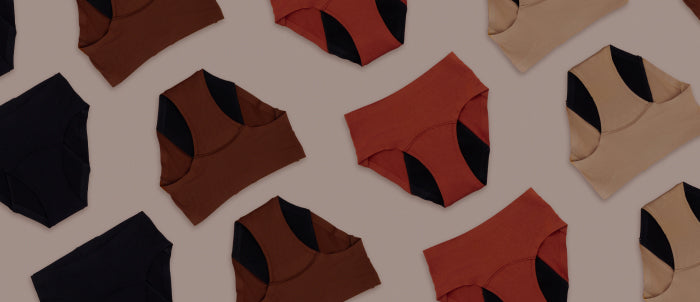
For teens who prefer something that can simply be worn like underwear, Mahina Teen Period Panty is designed to be worn without an additional pad. Mahina Teen Period Panty is available in Heavy Absorbency, absorbing 40 ml and replacing 4 pads in 1 wear, and Super Heavy Absorbency, absorbing 50 ml and replacing 5 pads in 1 wear, giving teens options for different flow needs.
Will Your First Few Periods Be Regular?
Your first few periods may not arrive on exactly the same date each month because menstrual cycles often take time to become regular after menarche.
ACOG reports that adolescent cycles are commonly more variable during the first years after menstruation begins. In the first gynaecological year, its data gives a mean cycle interval of approximately 32 days, while typical adolescent cycles can range from 21 to 45 days.
Instead of expecting your next period exactly one month later, note the first day of each period in a calendar or period tracker. Over time, this can help you recognise your own pattern.
When Is Starting A Period Considered Early?
A period that begins unusually early should be discussed with a healthcare professional, particularly when other signs of puberty also start very early.
The National Institute of Child Health and Human Development says the physical changes of puberty typically begin between ages 8 and 13 in girls. Puberty beginning before age 8 is generally considered precocious, or unusually early, puberty.
If bleeding occurs before the expected stages of puberty or you are unsure whether the bleeding is actually a period, tell a parent, guardian or healthcare professional rather than trying to work it out alone.
When Should You Speak To A Doctor If Your Period Hasn't Started?
Speak to a healthcare professional if your period has not started by age 15, or if you are 13 and have no other signs of puberty.
The NHS recommends seeing a GP in either of these situations. It notes that delayed periods can have different causes, including being underweight, very high levels of exercise, stress and hormonal factors, so the reason cannot be determined from age alone.
It is also worth asking for medical advice if you have concerns about how puberty is progressing, even if you have not reached one of these ages.
First Period Timing At A Glance
|
Question |
General guidance |
|
What is the average age for a first period? |
Around 12 years |
|
Can it start earlier? |
Yes, some girls start earlier |
|
What is a first period called? |
Menarche |
|
How long after breast development can periods start? |
Commonly around 2–3 years later |
|
Will the first few cycles be regular? |
Not necessarily |
|
No period by age 15? |
Speak to a healthcare professional |
|
No signs of puberty by age 13? |
Speak to a healthcare professional |
These ages are useful guideposts rather than deadlines for every body.
There Is No One 'Right' Age For A First Period
Most girls get their first period at around 12, but being earlier or later than a friend does not automatically mean something is wrong. Puberty happens on an individual timeline, and physical signs such as breast development can often tell you more than age alone.
Knowing what to expect, carrying a period product and having a trusted adult you can talk to can make the first period much easier to handle whenever it arrives.

Sources
- ACOG: Menstruation in girls and adolescents: using the menstrual cycle as a vital sign
- NHS: Starting your periods
- National Institute of Child Health and Human Development: Puberty and precocious puberty
- Mahina: Teen period panty
About The Author