

Key Takeaways
- Medium Absorbency: 25 ml, approximately 2.5 pads.
- Heavy Absorbency: 40 ml, approximately 4 pads.
- Super Heavy Absorbency: 50 ml, approximately 5 pads.
- Super Heavy Plus Absorbency: 80 ml, approximately 8 pads.
- 1 Mahina Period Panty is tested for 100 washes, or roughly 2 years with proper care.
- Mahina estimates 1 pair can replace around 260 disposable pads over its usable life.
- Reuse can mean fewer pad purchases and less single-use menstrual waste.
- End-of-life routes are available through Respun and Tooused.
A Mahina Period Panty can absorb the equivalent of 8 pads at the highest level. Across its usable life, Mahina estimates that 1 pair can replace roughly 260 disposable pads. Actual usage varies.
How Many Pads Can Each Mahina Absorbency Replace In 1 Wear?
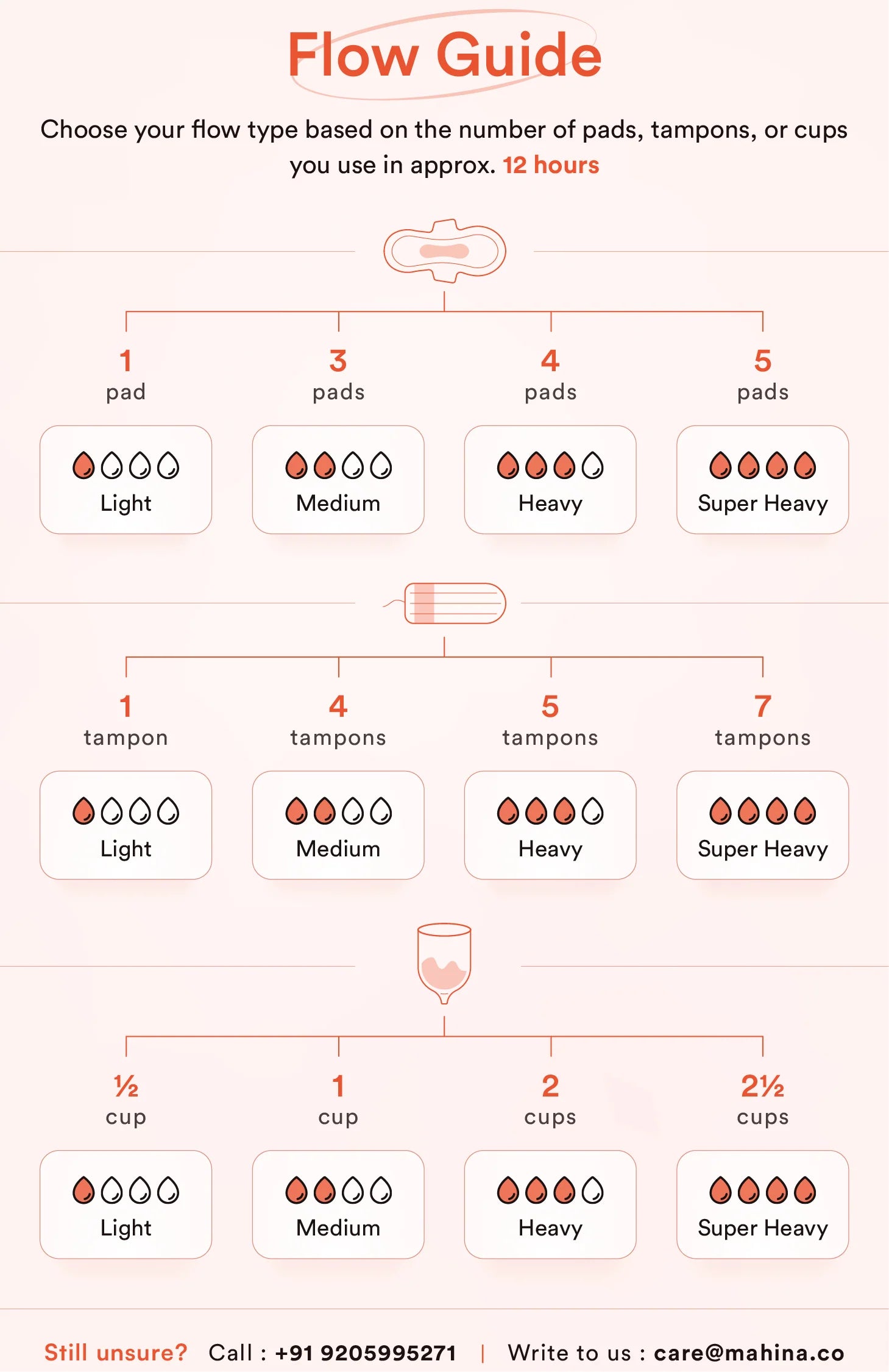
1 Mahina Period Panty can match the absorbent capacity of approximately 2.5 to 8 pads in 1 wear, depending on the absorbency selected.
|
Mahina Absorbency Levels |
Capacity |
Approximate pad equivalent |
|
Medium |
25 ml |
2.5 pads |
|
Heavy |
40 ml |
4 pads |
|
Super Heavy |
50 ml |
5 pads |
|
Super Heavy Plus |
80 ml |
8 pads |
Mahina Period Panties are designed for up to 12 hours of wear, depending on flow and absorbency. Change into a fresh pair earlier if the gusset feels damp or heavy.
Does Replacing Disposable Pads Make An Environmental Difference?
Replacing repeated single-use pads with a reusable product can mean fewer pads reaching the waste stream and less plastic-containing menstrual waste accumulating over time. India generates an estimated 113,000 tonnes of menstrual waste annually, according to the Government of India's India Science, Technology & Innovation portal.
A 2022 life-cycle assessment comparing menstrual products across India, France and the US found that menstrual underwear ranked 2nd lowest in environmental impact among the products studied. The assessment considered the product lifecycle from production through disposal.
The search phrase "how long do sanitary pads take to decompose" also points to why this issue matters. A Toxics Link report states that plastic components in menstrual products can remain in landfill for 500–800 years and estimates that more than 12.3 billion disposable pads are discarded in India each year.
What Does "Replace" Actually Mean?
"Replace" is an absorbency comparison: it shows how much menstrual fluid 1 Mahina Period Panty can hold compared with disposable pads.
It does not mean every wearer will avoid exactly that number of pads. Pad sizes, changing habits and flow differ, so the comparison is best used to understand the protection built into 1 pair.
How Many Disposable Pads Can 1 Period Panty Replace?
Mahina estimates that 1 pair can replace roughly 260 disposable pads across 100 washes, or approximately two years with proper care.
This is an approximate lifetime figure. The number avoided depends on how often the panty is worn, its absorbency and how frequently pads would otherwise be changed.
Does A Period Panty Save Money Too?
A reusable period panty can reduce recurring pad purchases because the same pair is used across multiple cycles instead of requiring a new product for every wear.
Disposable pad use also means repeatedly having to:
- buy pads for each cycle;
- keep track of how many are left;
- carry replacements when away from home;
- change and discard pads throughout the day; and
- restock month after month.
A reusable option shifts more of this spending towards a planned purchase and repeated use. Exact savings vary by pad price, usage, number of reusable pairs owned and laundry habits, so there is no single rupee-saving figure that applies to everyone.
What Happens After Those 100 Washes?
After a Mahina Period Panty reaches the end of its reusable life, Mahina provides an end-of-life route through Respun and Tooused instead of treating the bin as the only option.
Mahina redirects customers to its partner platforms for collection. With Tooused, customers can follow the Mahina-linked app journey and schedule a doorstep pickup. After collection, the product can be washed and shredded for repurposing into new material.
1 pair has a much longer story than its first wear: use it, wash it, reuse it for its intended life, then give it a more responsible disposal. It can reduce repeat purchases during use, reduce the number of single-use pads discarded, and still have a planned next step when its reusable life ends.

Sources
- Mahina: Period panty
- Science Direct: Menstrual products: a comparable life cycle assessment
- Toxics Link: Menstrual products & their disposal
- Respun: Reuse. Recycle. Respun.
- Tooused: India's smarter way to sell, donate & recycle old clothes
About The Author