

Key Takeaways
- PCOS can make the timing of your next period difficult to predict.
- Tracking your cycle can reveal patterns, but an app cannot guarantee when an irregular period will arrive.
- Keep period protection available even when you are not expecting your period.
- Period underwear can provide built-in protection on days when your period may arrive unexpectedly.
- Eating healthy and regular physical activity support PCOS management, but there is no single diet or exercise routine proven to regulate every PCOS cycle.
- Long gaps without periods should be discussed with a healthcare professional.
- A sudden change in your usual bleeding pattern should not automatically be attributed to PCOS.
Managing unpredictable PCOS periods is less about perfectly predicting your next period and more about being prepared when the timing keeps changing. Tracking your bleeding, keeping period protection nearby and knowing when a long gap needs medical attention can make irregular periods with PCOS easier to manage day to day.
Why Are PCOS Periods So Unpredictable?
PCOS periods (currently known as PMOS) can be unpredictable because ovulation may not happen regularly, which can make the time between periods vary considerably. If you want a deeper explanation of the condition itself, read Mahina's guide to PCOS causes, symptoms and diagnosis.
ACOG lists absent, infrequent, frequent and unpredictable periods among the menstrual changes associated with PCOS. Higher androgen levels can interfere with regular ovulation, which is one reason the menstrual cycle may become less predictable. To know more about this, read Mahina's guide to menstrual disorders.
How Can You Track PCOS Periods When They Are Irregular?
Track what actually happens rather than relying only on an app's predicted start date.
The NHS recommends using an app or diary to keep track of periods because recording each cycle can make irregular patterns easier to recognise.
Record:
- The first day of each period.
- The last day of bleeding.
- How many days passed between periods.
- Spotting between periods.
- Whether the period arrived earlier or later than you expected.
- Any noticeable changes in pain or other symptoms.
- Changes to medication or hormonal treatment.
A simple calendar is enough. You do not need a complicated tracking system.
Period apps can still be useful, but treat their predicted dates as estimates. If your cycles regularly change length, an algorithm based on previous cycles may not be able to tell you exactly when your next period will begin.
Over a few months, your record may show useful patterns even if your periods never become completely predictable.
What Should You Do When PCOS Periods Are Irregular?
When you cannot confidently predict the start date, prepare for the possibility of your period rather than trying to guess the exact day.
A practical routine can include:
- Keep one period product in your everyday bag.
- Store backups at places you spend a lot of time, such as work or college.
- Carry spare underwear if unexpected bleeding is a regular concern.
- Restock your period products before you run out rather than waiting for your next period to begin.
- If you are travelling, pack period protection even when your tracking app says your period is not due.
- Keep a note of your recent cycle dates so you can refer to them if you need medical advice.
If your period timing is unpredictable but your bleeding itself is usually manageable, the objective is simply to remove the surprise factor.
If heavy bleeding is the main issue once your period starts, that is a different problem and should be managed according to your flow rather than timing alone.
How Do You Stay Prepared For A Period That Can Arrive Anytime?
Keep protection somewhere you can reach easily, and choose an option that fits the way you want to prepare.
You could:
- Carry pads or tampons in your everyday bag.
- Keep a menstrual cup with you if that is the product you normally use.
- Carry a fresh period panty to change into.
- Wear period underwear on days when you think your period may arrive but cannot confidently predict the timing.
Period underwear can be particularly practical for unpredictable timing because the protection is built into the underwear. You can put it on at the start of the day, before bleeding starts, rather than waiting until you find a washroom to add a separate pad.
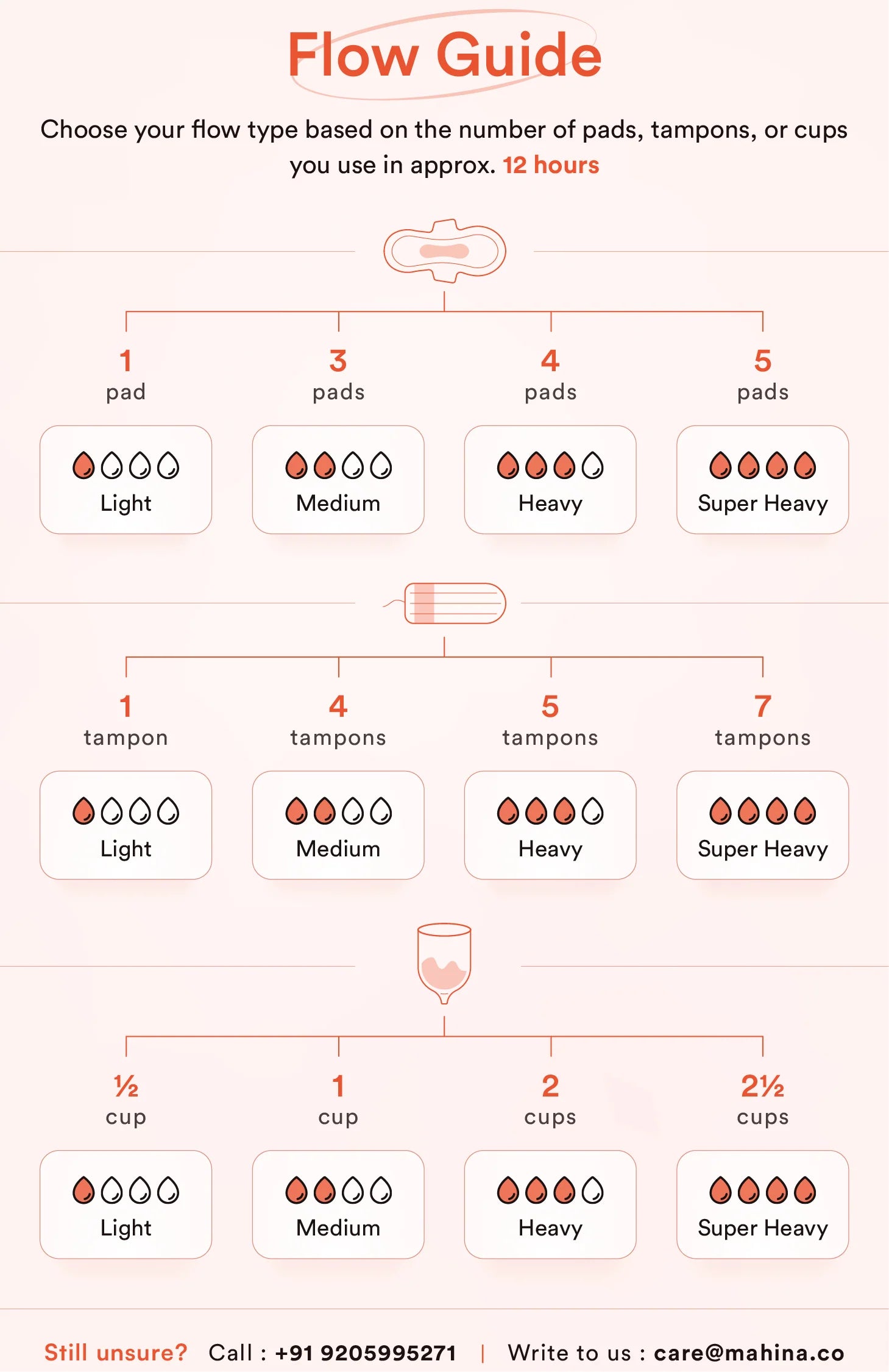
Mahina Period Panty is designed to be worn on their own, with different absorbency options available according to flow. The current collection includes Light, Medium, Heavy and Super Heavy options and is designed for up to 12 hours of wear depending on flow.
Explore Mahina period panties if built-in protection would make unpredictable period days easier to manage.
What Should You Keep In A PCOS Period-Ready Kit?
A small kit can cover most unexpected starts without carrying half your bathroom around.
|
Keep with you |
Why it can help |
|
Your preferred period product |
Gives you protection if bleeding begins unexpectedly |
|
One or two backups |
Useful if you are away from home longer than planned |
|
Spare underwear |
Useful after unexpected staining |
|
Small pouch |
Keeps clean and used reusable products separate |
|
Tissues |
Useful when washroom supplies are limited |
|
Your usual safe period-pain essentials |
Helpful if cramps begin with your period |
Keep the kit somewhere you already carry every day. A backup hidden at the bottom of a bag is more useful than a perfectly organised period kit left at home.
Can Lifestyle Changes Make PCOS Periods More Regular?
Healthy lifestyle habits are an important part of PCOS management, but no specific diet, workout or home remedy can guarantee that irregular periods will become regular.
NIH recommends healthy eating and physical activity for people with PCOS and notes that there are health benefits even without weight loss. It also states that there is no evidence that one specific diet composition or type of exercise is superior for PCOS outcomes.
Focus on sustainable habits such as:
- Eating a balanced diet that you can realistically maintain.
- Getting regular physical activity you enjoy.
- Avoiding highly restrictive diets marketed specifically as a PCOS "cure".
- Setting realistic health goals rather than trying to force a period to arrive.
- Following treatment recommended for your individual PCOS symptoms.
For people with higher weight, weight management can improve some PCOS outcomes, but this should be individualised and handled without assuming weight loss is necessary for everyone with PCOS. The guideline specifically notes that healthy lifestyle habits have benefits even when weight does not change.
If you specifically want to make your periods more regular without using hormonal birth control, speak to your healthcare professional. Other management approaches may be appropriate depending on your symptoms and health history, but there is no universal "natural" method that reliably regulates PCOS cycles.
How Late Can A PCOS Period Be?
There is no single number of days that every PCOS period can safely be considered "late".
Some people with PCOS experience long gaps between periods. However, you should not assume that going months without bleeding is something that can simply be ignored because you have PCOS.
ACOG recommends evaluation when periods stop for more than three months without explanation. The international PCOS guideline also identifies long-standing untreated absence of periods as an additional risk factor for endometrial hyperplasia and recommends strategies such as cycle regulation and, where appropriate, progestogen treatment to protect the uterine lining.
If pregnancy is possible and your period is later than expected, take a pregnancy test rather than assuming PCOS is responsible for the delay.
When Should You See A Doctor About Irregular PCOS Periods?
Speak to a healthcare professional when your bleeding pattern changes significantly, periods stop for a prolonged period, or you have symptoms that are unusual for you.
Seek medical advice if:
- You have gone around three months without a period.
- Your previously established pattern suddenly changes.
- You experience bleeding between periods or after sex.
- Your periods become substantially more painful.
- You develop very heavy or prolonged bleeding.
- You are concerned about any new symptom alongside your irregular periods.
The NHS advises speaking to a doctor if periods become irregular or the normal pattern changes, and recommends medical assessment for bleeding between periods.
PCOS can explain why periods are irregular, but it should not become the automatic explanation for every new menstrual change.
A Simple Routine For Unpredictable PCOS Periods
You may not be able to put an exact date on your next period, but you can reduce how much that uncertainty disrupts your day.
|
When |
What to do |
|
Throughout the month |
Log every period and unexpected episode of bleeding |
|
When leaving home |
Keep at least one period product with you |
|
When your period might be approaching |
Consider built-in protection if surprise bleeding is a concern |
|
When travelling |
Pack period products regardless of the predicted start date |
|
When a period starts |
Record the date rather than relying on the app to correct itself |
|
If months pass without a period |
Speak to a healthcare professional rather than continuing to wait |
The aim is not to organise your entire life around PCOS. It is to build enough preparation into your normal routine that an unexpected period becomes inconvenient rather than disruptive.
You May Not Predict Every PCOS Period, But You Can Be Ready For It
Irregular PCOS periods can make calendar predictions unreliable, but preparation does not require knowing the exact day your period will start.
Track what your cycle actually does, keep period protection within reach and pay attention to long gaps or new changes that need medical advice. If wearing protection before your period arrives feels easier than waiting for bleeding to start, explore Mahina period panties for built-in reusable protection.


Sources
- American College of Obstetricians and Gynecologists (ACOG): Polycystic ovary syndrome (PCOS)
- Mayo Clinic: Polyendocrine metabolic ovarian syndrome (PMOS)
- Mahina: Demystifying PCOS: causes, symptoms and diagnosis
- Mahina: Is Your Period Irregular? Oligomenorrhea, Amenorrhea, Menometrorrhagia Explained
- NHS: Irregular periods
- NIH: Recommendations From the 2023 International Evidence-based Guideline for the Assessment and Management of Polycystic Ovary Syndrome
- American College of Obstetricians and Gynecologists (ACOG): Amenorrhea: absence of periods
- NHS: Vaginal bleeding between periods or after sex
- Mahina: Period panty collection
About The Author