

Key Takeaways
- Period underwear has absorbent layers built into the panty to hold menstrual fluid; a menstrual cup is inserted into the vagina and collects fluid inside the cup.
- Period underwear is worn like regular underwear, while menstrual cups require learning how to insert, position, remove and clean them.
- How much each product can hold varies by the specific period panty absorbency or menstrual cup size.
- When a cup needs emptying, it can be cleaned and reinserted. Period underwear needs to be changed into a fresh pair.
- Menstrual cups generally have a longer usable lifespan and require fewer products for a full cycle.
- Period underwear requires no insertion and can also be worn as backup with a menstrual cup.
- The better option depends on your flow, comfort, activity, changing access and personal preference.
Both period underwear and menstrual cups are reusable period products. However, when comparing period underwear vs menstrual cup, neither is automatically better for everyone.
Period underwear is worn like regular underwear, with absorbent layers built into the panty to hold menstrual fluid. A menstrual cup is folded and inserted into the vagina, where it opens and collects menstrual fluid until it needs to be emptied.
The better option depends on whether you are comfortable with insertion, how heavy your flow is, where you need to change and what feels easiest to use during your period.
Period Underwear vs Menstrual Cup: What's The Quick Verdict?
Period underwear is generally easier if you want something you can simply put on like regular underwear, without inserting or layering another period product. A menstrual cup can be more convenient if you are comfortable with insertion and want one product that can be emptied, cleaned and reused throughout the day.
|
Common question |
Period underwear |
Menstrual cup |
|
How does it work? |
Absorbent layers are built into the underwear and absorb menstrual fluid |
A flexible cup is inserted into the vagina, where it opens and forms a seal so menstrual fluid collects inside it |
|
Do you need to insert it? |
No |
Yes |
|
How much can it hold? |
Depends on the product and absorbency. Mahina options range from 15 ml for DPLU to 80 ml for DeepSleep |
Depends on size and design. Typical brimful capacities listed in a BIS draft range from around 15–40 ml |
|
How easy is it to learn? |
Straightforward. Put it on like regular underwear |
Takes practice to fold, insert, position, remove and clean |
|
How do you change outside home? |
Change into a fresh pair and store the used panty in a waterproof or silicone pouch |
Remove, empty, clean as instructed and reinsert |
|
Can it handle heavy flow? |
Yes, when the absorbency matches your flow |
Yes. It can also be emptied more frequently on heavier days |
|
Can you sleep in it? |
Yes, when capacity and wear guidance suit your overnight flow |
Many cups allow extended wear, but follow the individual product instructions |
|
Can you swim in it? |
Regular period underwear is not designed for swimming |
Yes, if your cup's usage instructions allow it |
|
Is it reusable? |
Yes |
Yes |
|
Who may prefer it? |
People who do not want insertion, want something easy to wear, need overnight protection or want cup backup |
People comfortable with insertion who want one product they can empty and reuse through the day |
The simplest difference is this: period underwear absorbs menstrual fluid into layers built into the panty, while a menstrual cup collects menstrual fluid inside a cup inserted into the vagina.
The NHS describes menstrual cups as reusable products placed inside the vagina to collect blood, while period underwear absorbs menstrual flow.
How Do Period Underwear And Menstrual Cups Work?
Period underwear absorbs menstrual fluid within layers built into the gusset, while a menstrual cup collects fluid inside the vagina.
With period underwear, you put the panty on in the same way as regular underwear. The built-in absorbent area takes in menstrual fluid during wear. Once the panty needs changing, you remove it, rinse and wash it according to its care instructions, dry it completely and reuse it.
Most reusable menstrual cups are made from a flexible material such as silicone. You fold the cup, insert it into the vagina and allow it to open. Once correctly positioned, the cup opens against the vaginal walls and forms a seal that helps keep it in position while menstrual fluid collects inside.
To remove it, you pinch the base to break the seal, gently remove the cup, empty the fluid and clean it before reinserting it according to the product's instructions.
Cleveland Clinic's menstrual cup guidance explains the insertion process, how the cup opens, why the seal matters and how to break that seal during removal.
This is the fundamental difference between the two: one absorbs, while the other collects.
How Much Does A Menstrual Cup Hold Compared With Period Underwear?
Capacity varies across both products, so compare the stated millilitres of the actual period panty or menstrual cup you are considering. The usual capacities are:
-
Small: 15–20 ml
-
Medium: 20–30 ml
-
Large: 30–40 ml
The same draft notes that cup capacity varies by brand, size and design, so these figures are indicative rather than universal.
Some menstrual cups available in India therefore sit toward the lower or upper end of this approximate range depending on their size.
Mahina offers different capacities for different needs:
|
Mahina option |
Capacity |
Mahina's stated equivalent |
|
DPLU |
15 ml |
Around 4 panty liners |
|
Mahina Period Panty, Medium |
25 ml |
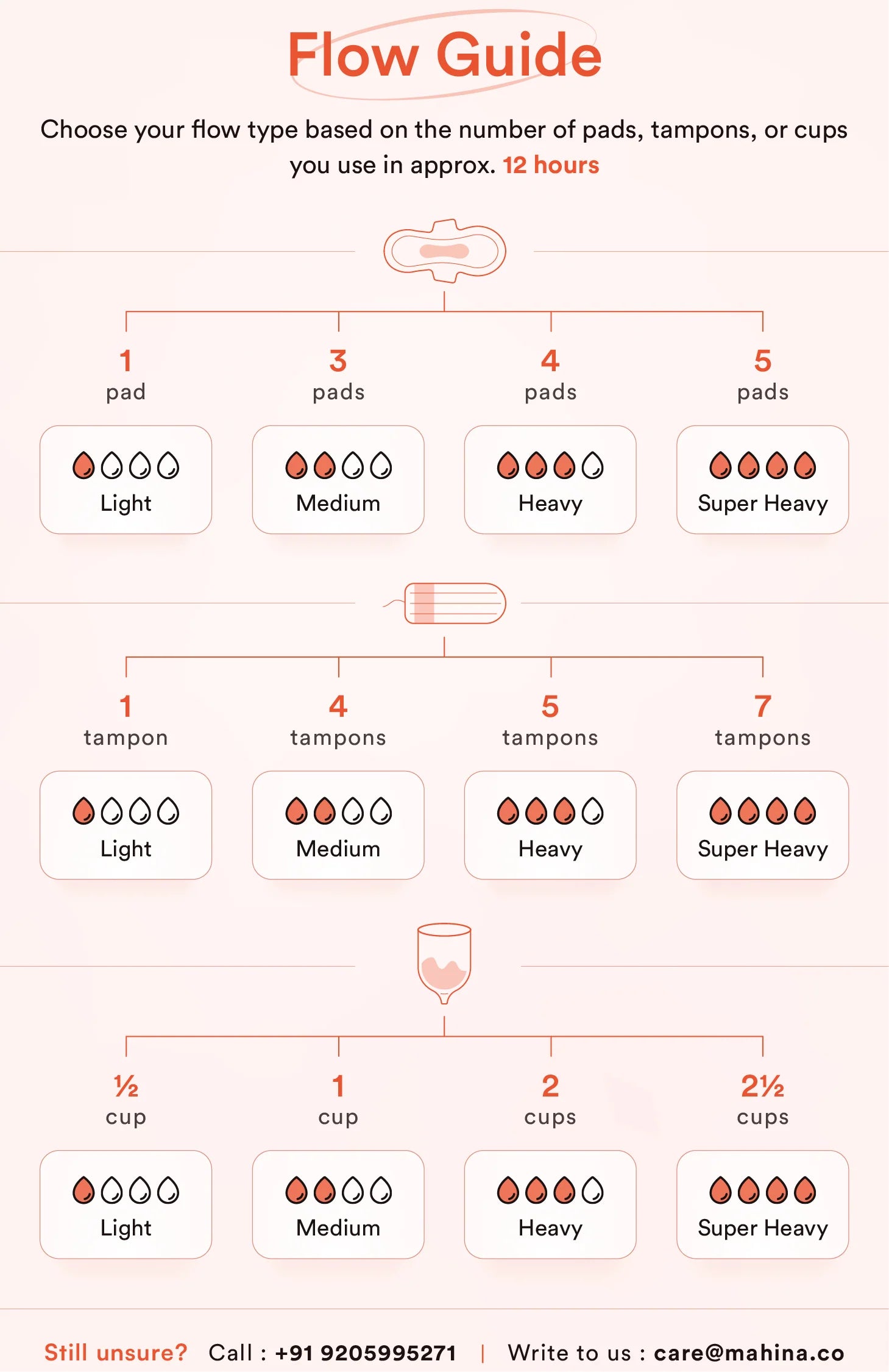
Around 3 pads, 4 tampons or 1 menstrual cup |
|
Mahina Period Panty, Heavy |
40 ml |
Around 4 pads, 5 tampons or 2 menstrual cups |
|
Mahina Period Panty, Super Heavy |
50 ml |
Around 5 pads, 7 tampons or 2.5 menstrual cups |
|
DeepSleep Period Panty™ |
80 ml |
Up to 8 pads |
Mahina's published absorbency guides list Medium at 25 ml, Heavy at 40 ml and Super Heavy at 50 ml, along with their equivalent pad, tampon and cup mappings. DPLU holds 15 ml for lighter everyday needs.
DeepSleep Period Panty™ is Mahina's 80 ml overnight period panty that can hold 80ml of menstrual fluid and replace 8 pads in 1 wear.
Which Is Better For Beginners: A Menstrual Cup Or Period Underwear?
Period underwear is usually simpler to begin with because there is no insertion technique to learn.
You wear it like regular underwear, so the main decisions are choosing the correct size and matching the absorbency to your flow.
Menstrual cups require learning how to:
- Fold the cup.
- Insert it comfortably.
- Allow it to open correctly.
- Position it so it forms a proper seal.
- Break the seal before removal.
- Empty and clean it correctly.
Cleveland Clinic notes that menstrual cups can have a learning curve and that insertion and removal may take some trial and error at first.
That does not make a cup a bad beginner product. If you are comfortable with insertion and willing to practise, it can become an easy part of your period routine. Period underwear simply requires less technique from the first wear.
Which Is More Comfortable?
Comfort depends on what you personally prefer during your period.
Period underwear may suit you if you:
- Do not want to insert a period product.
- Prefer something that feels closer to regular underwear.
- Want to put on one product without layering a pad or inserting another product.
- Find inserted period products uncomfortable.
- Prefer underwear-style protection while sleeping.
A menstrual cup may suit you if you:
- Are comfortable inserting and removing it.
- Prefer not to wear an absorbent period product.
- Want to empty and reuse the same product rather than change underwear.
- Swim regularly.
- Prefer not to carry replacement period products through the day.
When properly inserted, a menstrual cup generally should not be uncomfortable or constantly noticeable. If insertion hurts or the cup remains uncomfortable, the positioning, size or product may not suit you. Cleveland Clinic recommends stopping and speaking to a healthcare professional if insertion is painful.
Which Is Better For Heavy Flow?
Both menstrual cups and period underwear can work for heavy flow. The practical difference is what you do once the product reaches its capacity.
With a menstrual cup, you remove it, empty it and reinsert it. On heavier days, that can mean emptying the cup more frequently.
Cleveland Clinic similarly notes that a cup may need to be changed or emptied more often on heavy-flow days to reduce the chance of leaking.
With period underwear, you choose the absorbency before wearing it. Mahina Period Panty Heavy holds 40 ml, Super Heavy holds 50 ml and DeepSleep Period Panty™ holds 80 ml.
Period underwear may therefore suit someone who wants one product they can wear without insertion, while a cup may suit someone who would rather empty and reuse the same product during the day.
For very heavy flow, consider:
- How much your chosen product holds.
- How quickly you normally fill it.
- How easily you can access a washroom.
- Whether you are comfortable inserting and removing a cup.
- Whether you would rather carry a replacement panty or empty a cup.
If period underwear suits your preference, explore Mahina Period Panty across different absorbency levels.
Which Is Better For Overnight Use?
Both menstrual cups and period underwear can work overnight when the specific product's capacity and wear guidance suit your flow.
A cup may suit someone who is comfortable sleeping with an inserted product and whose chosen cup allows the required wear time.
Period underwear may suit someone who would rather sleep without inserting anything. On heavier nights, choosing a product specifically built for overnight flow can also give you higher capacity and more coverage.
This is where Mahina DeepSleep Period Panty™ fits in. It is engineered for rest and designed for heavy overnight flow. DeepSleep holds 80 ml, equivalent to up to eight pads, provides full front-to-back coverage and is tested to 150 washes.
The better overnight choice is less about which product is universally superior and more about which gives you enough capacity while feeling comfortable through the night.
Which Is Less Likely To Leak?
Both period underwear and menstrual cups can leak if the fit, capacity or usage is not right.
Period underwear may leak when:
- The absorbency is too low for your flow.
- The panty has reached its capacity.
- The fit is too loose.
- The absorbent gusset does not remain correctly positioned.
A menstrual cup may leak when:
- It has not fully opened after insertion.
- It has not formed a proper seal.
- It is incorrectly positioned.
- The cup becomes full.
- The shape or size does not suit you.
Cleveland Clinic notes that cup leakage can happen when the cup has been inserted incorrectly or has become full.
There is not enough strong direct evidence comparing period underwear against menstrual cups to say that one consistently leaks less than the other. What matters more is whether the product fits correctly and whether its capacity matches your flow.
Which Is Better For Exercise, Swimming And Travel?
The answer changes depending on the activity.
For exercise
Both can work.
Period underwear may feel simpler if you want to put it on like ordinary underwear and exercise without inserting another product.
A menstrual cup can also work during exercise once it is correctly inserted and comfortably positioned.
For swimming
A menstrual cup has the advantage between these two options.
Regular period underwear absorbs liquid, so it will also take in pool or sea water. It should not be treated as period swimwear.
Menstrual cups sit inside the vagina and can generally be worn while swimming when the product's instructions permit it.
For travel
A cup can be convenient because you can empty, clean and reuse the same product rather than carrying several replacement pairs.
Period underwear has a different advantage: there is nothing to insert or remove in an unfamiliar washroom. If you need to change, the used panty can be folded and stored in a waterproof or silicone pouch until you can wash it.
The better option depends on which changing routine feels easier to you.
Which Is More Cost-Effective Long Term?
If you compare product lifespan and the number of products usually needed for a full cycle, menstrual cups generally have the cost advantage.
Reusable menstrual cups can last for several years with correct care. A Government of India Press Information Bureau release on reusable menstrual cups describes a usable lifespan of approximately five to ten years for the product discussed.
Because the same cup can be emptied and reinserted during a period, one cup may be enough for much of your cycle.
Period underwear works differently. Once a pair has been worn, it needs to be washed and dried before being worn again, so several pairs are usually more practical if you want to use period underwear throughout your whole period.
Mahina Period Panty is designed for up to 100 washes, or roughly two years with proper care. DeepSleep Period Panty™ is tested to 150 washes.
|
|
Menstrual cup |
Mahina Period Panty |
|
Typical usable life |
Around 5–10 years for some reusable cups, depending on product and care |
Around 100 washes or roughly 2 years for standard Mahina Period Panty |
|
How many are needed during a cycle? |
One may be enough because it can be emptied and reinserted |
Multiple pairs are usually more practical for a full cycle |
|
What else should you consider? |
Requires insertion, removal and cleaning |
Requires no insertion and also functions as the underwear itself |
If you are comfortable using a menstrual cup, it can be the more cost-efficient option over many years.
If you do not want to insert a period product, period underwear can still reduce repeat purchases of disposable products while giving you a reusable option that fits the way you prefer to manage your period.
Which Is More Sustainable?
Both products are reusable, but available life-cycle research gives menstrual cups an environmental advantage.
A 2022 life-cycle assessment published in Cleaner Environmental Systems compared menstrual cups, menstrual underwear, reusable pads and disposable menstrual products across France, India and the US.
Menstrual cups had the lowest environmental impact across all eight indicators and all three countries studied. Menstrual underwear ranked second among the reusable products assessed.
The study also looked at combinations of products and found that using a menstrual cup with menstrual underwear produced the lowest impact among the combined-product scenarios studied.
So if environmental impact is your only deciding factor, the menstrual cup has the stronger evidence.
In everyday use, however, the environmental impact of either product will also depend on how long you keep it, how you wash it and how often you replace it.
Can You Use A Menstrual Cup And Period Underwear Together?
Yes. You can wear period underwear with a menstrual cup if you want backup protection.
This can be useful if:
- You have heavy flow.
- You are still learning how to position your cup.
- Your cup occasionally leaks.
- You want additional reassurance overnight.
- You are travelling.
- You do not know exactly when your cup will need emptying.
The cup collects menstrual fluid, while the period underwear can absorb fluid if the cup leaks or becomes full.
You do not need to use both. For some people, however, the combination gives them the benefits of a cup with an additional layer of reassurance.
Period Underwear Or Menstrual Cup: Which Should You Choose?
Choose period underwear if you want something you can wear like ordinary underwear without inserting a product.
You might prefer period underwear if:
- You are new to reusable period care.
- You do not like inserting menstrual products.
- You want built-in absorbency without layering another product.
- You want an overnight option.
- You want backup protection with a cup.
- You would rather change underwear than empty a cup.
Choose a menstrual cup if you are comfortable with insertion and want one product that can be emptied and reused during the day.
You might prefer a menstrual cup if:
- You are comfortable inserting and removing it.
- You want to carry fewer replacement products.
- You swim regularly.
- You travel frequently.
- Long-term cost is your highest priority.
- Environmental impact is your highest priority.
You do not have to use one product for every situation.
You might use a cup while swimming or travelling, period underwear overnight, or both together on particularly heavy days.
If you prefer underwear-style period protection, explore Mahina Period Panty across different absorbencies.

Sources
- Cleveland Clinic: Everything you need to know about menstrual cups
- Press Information Bureau, Government of India: Minister of State for Health Dr Bharati Pravin Pawar launches HLL Menstrual Cups
- Science Direct: Menstrual products: a comparable life cycle assessment
- Mahina: Period panties explained: how they actually handle heavy flow
About The Author