

Key Takeaways
- You do not need a perfect speech to tell your mom that you got your period.
- A simple sentence such as "Ma, I think I got my period" is enough to start the conversation.
- If saying it face-to-face feels awkward, you can text her or speak to her privately instead.
- Tell her what you need, whether that is a period product, help with cramps or simply an explanation of what happens next.
- Your first few periods may not arrive on an exact monthly schedule.
- If you do not feel comfortable or safe talking to your mom, speak to another trusted adult.
- Keep a period product with you once your periods begin, especially for school or days away from home.
If you are wondering how to tell your mom about your first period, you can keep it very simple: tell her that you have started bleeding and think you have got your period. You do not need to know exactly what to do next. Asking for a period product or some help is already enough to begin the conversation.
What Can You Say To Your Mom When You Get Your First Period?
You can tell your mom you got your period in one straightforward sentence. There is no need to make the conversation formal or explain everything you are feeling at once.
You could say:
- "Ma, I think I just got my period."
- "I noticed some blood in my underwear. Can you help me?"
- "I think my period started. Do we have any period products?"
- "Can I talk to you privately? I think I got my first period."
- "I got my period and I'm not really sure what I'm supposed to do."
Pick whichever sounds most like something you would actually say. Your job is not to announce your period perfectly, but simply to let someone know what has happened and what you need.
What If You Feel Embarrassed Telling Your Mom?
Feeling awkward about talking about your first period is understandable, especially if periods have not been discussed much at home. You can choose the way of telling her that feels easiest rather than forcing yourself into a big face-to-face conversation.
Try one of these options:
- Tell her when the two of you are alone.
- Send her a text saying that your period has started.
- Ask her for a pad or period product and let that begin the conversation.
- Write a note if speaking about it feels too uncomfortable.
- Start with "This is a little awkward for me to say" if that makes it easier to get the words out.
You can also be specific about what you want from the conversation. You may want help choosing a period product, advice about cramps or simply reassurance that what you are experiencing is normal.
What Should You Do After Your First Period Starts?
Once your first period starts, focus on getting comfortable, choosing a period product and noting when the bleeding began.
A simple first-period checklist is:
- Wash or wipe yourself gently if you need to.
- Put on a pad, period panty or another period product you know how to use.
- Change stained underwear or clothes.
- Note the date your period started.
- Tell your mom or another trusted adult if you need products or help.
- Keep a spare period product in your school or everyday bag.
A period is the shedding of blood and tissue from the lining of the uterus. ACOG explains that first periods commonly begin around ages 12 to 13, although starting earlier or later can also be normal.
Which Period Product Should You Use For Your First Period?
The best first period product is one that you understand how to use, feels comfortable and suits your flow. You do not have to choose the same period product your mom uses.
|
Period product |
Why a beginner may choose it |
What to consider |
|
Pads |
Simple to place on top of underwear |
Need to be changed according to the product instructions |
|
Period panties |
Worn like regular underwear with built in absorbency |
Need to be washed and dried before reuse |
|
Tampons |
Compact and inserted into the vagina |
Require comfortable insertion and timely changing |
|
Menstrual cups |
Reusable and inserted into the vagina |
Take some practice to insert, remove and empty |
There is no requirement to move from one product to another as you get older. You can use whichever option works comfortably for your body and routine.
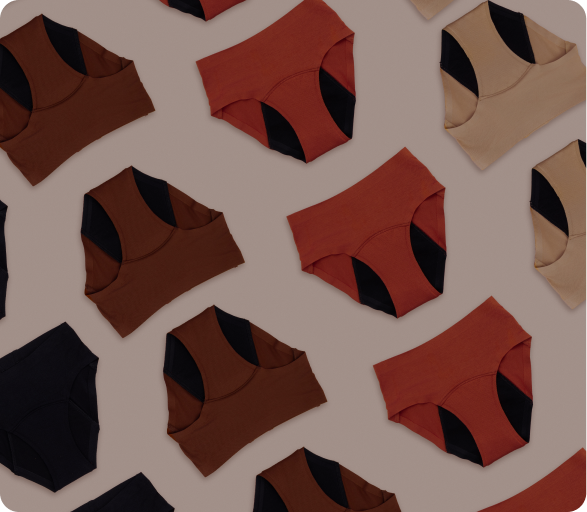
For teens who prefer period underwear, Mahina Teen Period Panty can be slipped on like underwear and are designed to be worn without an additional product. Mahina currently offers Teen Period Panties in Heavy and Super Heavy absorbencies for different flow needs.
What Should You Ask Your Mom About Your Period?
Your first conversation can also be a chance to ask the practical questions that suddenly become relevant once periods begin.
You might ask:
- Which period products do we have at home?
- How often should I change the product I am using?
- What should I carry to school?
- What can I do if I get cramps?
- How do I wash blood out of my underwear?
- How will I know when my next period is coming?
- What should I do if my period starts while I am at school?
You do not need to ask everything at once. Periods become much easier to understand once you have experienced a few cycles and know what questions actually matter to you.
Will Your Next Period Come Exactly One Month Later?
Your next period may not arrive on exactly the same date, particularly when your periods have only recently started.
ACOG notes that menstrual cycles are often irregular during adolescence, especially in the early years after the first period. A typical period itself usually lasts around two to seven days, but cycle timing can vary while the menstrual cycle matures.
Tracking the first day of each period in a calendar or period tracker can help you gradually understand your own pattern. Keep a period product in your bag even when you are not sure exactly when the next period will arrive.
What If You Don't Feel Comfortable Telling Your Mom?
If you do not feel comfortable or safe telling your mom, you can speak to another adult you trust. The important thing is having access to appropriate period products, reliable information and help when you need it.
Depending on your situation, that person might be:
- Your dad or another parent.
- A guardian.
- An older sibling.
- An aunt or another relative.
- A school nurse.
- A trusted teacher or counsellor.
You can use exactly the same simple opening: "I got my period and I need some help."
When Should You Tell An Adult About Period Problems?
Tell a parent, guardian or healthcare professional if your period symptoms are worrying you or are interfering with your usual activities.
ACOG advises getting medical guidance when bleeding is unusually heavy, including when you are soaking through a pad or tampon every one to two hours, or when bleeding lasts longer than seven days.
You should also tell an adult if period pain is severe enough to stop you from going to school or doing the things you normally do. You do not need to work out whether something is medically wrong by yourself.
Telling Your Mom Can Be Simple
Getting your first period may feel like a big moment, but telling your mom does not have to become a big announcement. "Mom, I got my period. Can you help me?" is genuinely enough.
From there, you can figure out the products, cramps, school bags, tracking and everything else one step at a time. You do not need to know how periods work perfectly on day one.


Sources
About The Author