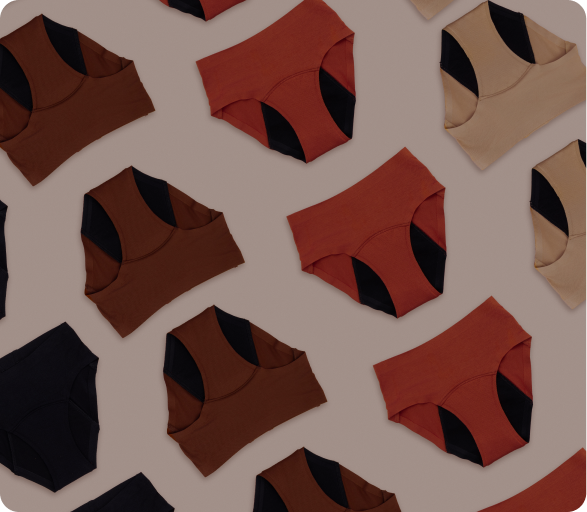


With more options now available, menstruators are seeking period products that prioritise comfort, security, and ease of use. Mahina’s teen period underwear is designed for younger bodies, featuring built-in absorbency that keeps teens leak- and stain-free for up to 12 hours, with full front-to-back coverage. Lab-tested for safety, it minimises mid-day adjustments and supports active routines.
As the range of period products keeps growing, each one promising more comfort or fewer leaks, teens are no longer settling for uncomfortable period products, and parents are no longer defaulting to whatever they grew up using themselves. Moreover, it has actually gotten harder to know what to pick. For a parent wondering whether a newer option like reusable period underwear is a safe, sensible switch, the honest answer is yes, as long as you know what to look for. Period panties for teenagers are designed to offer that middle ground, combining familiar underwear-like comfort with built-in period protection.
At What Age Is Period Underwear Considered Safe For Teenagers?
There is no fixed age that makes period underwear appropriate, and that surprises a lot of parents expecting a specific number. What matters is whether a teen has started menstruating and whether the product actually fits her body comfortably. The safest period panties for teenagers are those designed for younger proportions, made with skin-safe materials and matched to the wearer’s flow.
A girl who gets her first period at 10 can use a properly fitted teen period panty just as safely as one who starts at 13 or 14, because the safety question is really about fit and design, not age on its own.
This is why teen-specific sizing exists in the first place. A teen period panty built for ages 10 to 18 accounts for smaller proportions and different routines than an adult product does, so a parent is not left guessing whether a scaled-down adult pair is actually appropriate for a younger body. Choosing period panties for teenagers instead of adapting an adult product can therefore make a meaningful difference to both fit and everyday comfort.
Is Period Underwear Harder For First-Time Users To Manage Than Pads?
If anything, most teens find it easier, not harder. Pads require strategic sticking and adjusting, along with checking for wing placement, and they can shift, bunch, or feel bulky through a long school day. Period panties for teenagers remove that step entirely, since the absorbency is already built into the garment and worn exactly like regular underwear. A teen period panty also removes the need to position wings or repeatedly check whether the protection has shifted.
Mahina’s teen period panty is made with a 3-layer absorbent system built into the gusset.
- A top layer that pulls moisture away from the skin, removing the wet feeling that pads usually cause.
- A middle layer that absorbs and holds enough menstrual blood to replace multiple pads throughout 1 wear.
- A bottom layer that acts as a leak-free and stain-free barrier and stops anything from leaking through.
All three layers do their job without needing to be adjusted or checked throughout the day, which is the biggest difference teens actually notice compared to a pad. Because period panties for teenagers hold these protective layers within the garment itself, they can feel simpler to manage during school, sleep and physical activity.
What Do Pediatric Gynaecologists Say About Teens Skipping Pads For Reusable Underwear?
A lot of the caution around conventional pads comes down to one simple fact: the vagina is a mucous membrane, which means it absorbs substances faster than regular skin does. That matters because most plastic-backed sanitary pads are built with synthetic layers, fragrance, and adhesives sitting directly against that highly absorbent area for hours at a time.
Studies on India's most widely sold sanitary pad brands, both organic and inorganic, found two groups of harmful chemicals, phthalates and volatile organic compounds, present across the board. The study linked prolonged exposure to these chemicals to endocrine disruption, reproductive health issues, and increased cancer risk.
This is exactly why parents and teens should look for products that are independently tested and built with materials that are safe for the body and skin, rather than assuming any product on a shelf has been checked for what actually touches the skin. It is less about pads being universally bad and more about knowing which products have proof behind their safety claims and which are simply relying on packaging.
Are There Hygiene Precautions Specific To Teen Skin And Bodies That Differ From Adults?
Teen skin is more sensitive than most adults realise, which is exactly why finding a product that has actually been tested for safety matters more here than it might elsewhere. Mahina's teen period underwear is built with that in mind.
- OEKO-TEX certified fabrics: Mahina’s teen period panties are made with OEKO-TEX certified fabrics. This means that the fabrics are independently verified to be free from harmful substances and restricted dyes.
- Toxicology testing: Mahina’s teen period panties are tested in NABL-accredited labs to ensure they are free of PFAS, formaldehyde, heavy metals, harmful azo dyes and other toxic substances.
- Bioburden testing: Mahina’s teen period panties have also been tested in their used state to ensure they remain safe for prolonged use. This test was carried out after 6 months of real use, and the results clearly depicted that the panty is safe for continued use as long as it is cared for properly.
Beyond testing, a few design choices make everyday comfort easier for a teen body. A thoughtfully designed teen period panty should account for movement, sensitive skin and the smaller proportions of a developing body.
-
Bonded Seams
Bonded seams remove the friction points and leak points that traditional stitching can create in the gusset, helping reduce discomfort during long hours of wear. -
Long Wear-Time
Mahina’s teen period panty can be worn for 12 hours straight and replaces 4-5 pads across its 2 absorbency levels: Heavy and Super Heavy. This reduces the number of times teens have to rush to the washroom to change pads and instead allows them to concentrate in class. -
Teen-Specific Sizing
Sizing designed specifically for teen bodies keeps the fit secure without the product gaping, slipping, or digging into the body, which can be a problem if adult products have simply been scaled down. -
Full Front-To-Back Coverage
Full front-to-back coverage provides ample coverage without needing to layer a liner or pad underneath for added protection. -
Cotton-Based Comfort
The top-most layer of the gusset that comes into contact with sensitive skin is a moisture-wicking cotton layer that helps keep the skin dry rather than damp. Plus, the body of the product is also made with cotton, making it feel closer to regular underwear than a clinical period product. -
Familiar, Breathable Fabric
Cotton’s natural breathability and familiar feel make the product easier for teens to get used to, reducing the chances of them switching back simply because it feels unfamiliar or uncomfortable.
How Should Parents Introduce Period Underwear To A Daughter Starting Her Period?
The switch tends to go best when it is introduced gently rather than all at once, with a few small choices making a real difference in how comfortable she feels with it.
- Start at home, or on a lighter flow day. This lets her get used to the feel of wearing it without the added pressure of a full school day, so if anything feels off, she can figure it out without an audience.
- Let her pick her own colourway. Choosing it herself, rather than having one picked for her, makes the product feel like hers rather than something handed down, which matters more than it sounds for a teen still adjusting to her period.
- Walk her through the wash routine the first few times. This is the one genuinely new habit in the whole switch, and doing it alongside her a couple of times means she is not left guessing on her own.
How To Wash Period Underwear
- Rinse in cold water immediately after wearing, until the water runs clear.
- You can also soak the panty in water for 10 to 15 minutes if any blood remains, rather than scrubbing it out.
- Squeeze the gusset gently to remove any liquid; avoid twisting or wringing it.
- Hand wash the panty with a mild, fragrance-free detergent, or toss it in the washing machine on a gentle cycle.
- Air dry fully, ideally hung by the waistband, before wearing or storing it again.
- Only store it once it is completely dry to avoid any lingering odour.
Keeping a small rotation of period panties for teenagers also allows every pair enough time to wash and dry fully before it is worn again.
The Bigger Picture For Parents
The shift away from pads is about teens finding a product that asks less of them during an already confusing stage. One that doesn’t require insertion, adjusting, or the stress of disposal at school. A well-fitted teen period panty, introduced gradually and paired with a simple wash routine, tends to make the first few cycles feel a lot less overwhelming for both a daughter and the parent helping her through it.

Sources
- Mahina: The science of absorbent underwear explained
- Mahina: How teen period panties change the first period experience
- Mahina: Shop teen period care
- Healthline: How often should you change your pad?
- PubMed: The Indian perspective on the harmful substances found in sanitary napkins and their effects on the environment and human health
About The Author