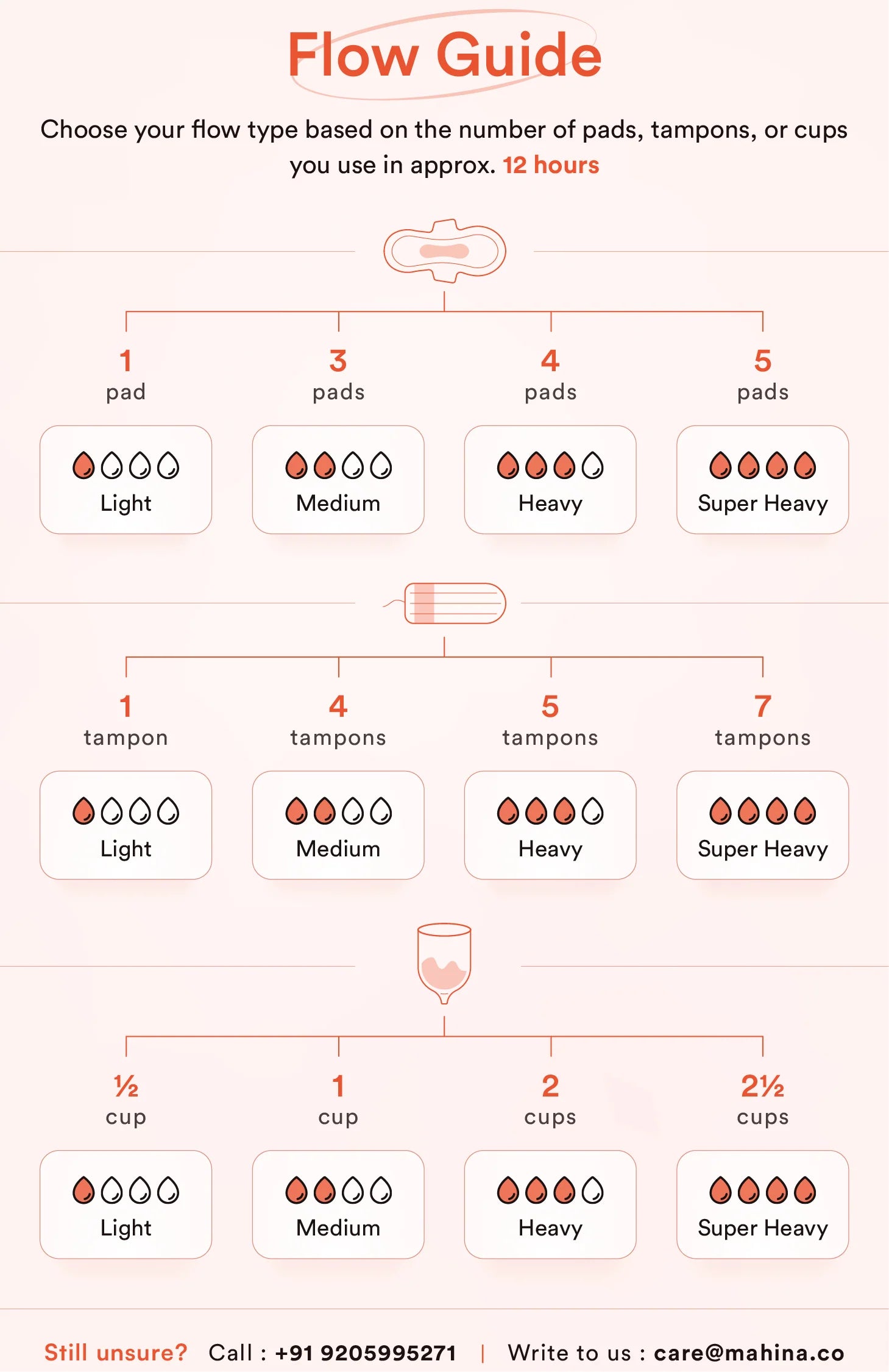


Periods are often treated as something you are simply meant to put up with. Pain, exhaustion, heavy bleeding, discomfort, and mood swings. All of it gets normalised very early on. Over time, this makes it hard to tell what is actually part of a healthy period and what your body is signalling that something is off. Knowing what is considered normal when it comes to your period’s flow, colour, timing, and symptoms gives you a reference point. It helps you stop second-guessing yourself and start recognising when something is out of balance.
What A Healthy Period Flow Looks Like
A healthy menstrual flow usually lasts 3-7 days. For most people, the first one or two days are heavier, followed by lighter bleeding as the period tapers off. Flow that changes across the week is normal and expected.
A practical way to understand your flow is by noticing how often you need to change your period products. On heavier days, that might be every few hours. On lighter days, much less. A healthy flow allows you to go about your day without constant urgency around your period or fear of leaks, especially when using period protection that matches your needs.
Flow can vary from cycle to cycle depending on stress levels, sleep, nutrition, and hormone fluctuations. A slightly heavier or lighter month now and then is not usually a concern. What is worth paying attention to is the flow that consistently feels unmanageable, extremely heavy, or unusually light for several cycles in a row.
Period Blood Colour: What’s Normal And What It Means
Period blood can look different across a cycle, and that variation is often completely healthy. The colour of your period blood can vary based on several factors, including blood flow, how long it's been in your uterus, and exposure to oxygen. Here are a few common colours and what they typically mean:
- Pink or Light Red: A mix of fresh blood and cervical mucus, often seen on lighter flow days or towards the end of your period.
- Bright Red: Fresh blood that is flowing quickly from the uterus, commonly seen in the early days of your period.
- Brown or Dark Red: Older blood that has taken longer to leave the uterus, often appearing at the start or end of your period.
The colour of your period blood on its own rarely tells the full story. Looking at colour alongside flow, timing, and how you feel gives a clearer picture of menstrual health.
Symptoms, Timing And Cycle Regularity
A healthy period often comes with physical and emotional changes. These symptoms are common and usually manageable:
- Mild to moderate cramps, especially on the first and second days
- Lower back discomfort or a heavy feeling in the pelvis
- Bloating or water retention
- Fatigue or lower energy levels
- Breast tenderness
- Subtle mood shifts or emotional sensitivity
These symptoms may feel uncomfortable, but they typically ease with rest, gentle movement, hydration, or simple pain relief methods. A healthy period does not usually stop you from functioning entirely or make you feel like you have to push through intense pain every month.
Cycle timing is another key marker. A healthy menstrual cycle usually falls between 21 and 35 days for adults, with some variation being normal. Regular does not mean exact, as many people have a predictable range rather than a fixed date. Stress, illness, travel, or changes in routine can delay ovulation and shift your cycle by a few days.
What A Healthy Period Usually Does Not Include
While some variation is normal and even expected, certain experiences fall outside the healthy range and should be noted for further discussion:
- Bleeding so heavily that you need to change your period product every hour for several hours.
- Periods that last longer than seven days consistently.
- Severe pain that interferes with work, school, sleep, or daily activities.
- Periods that frequently disappear or arrive unpredictably without a clear reason.
- Very large or frequent clots paired with heavy bleeding.
- Extreme fatigue, dizziness, or weakness during your period.
- Emotional symptoms that feel overwhelming or unmanageable every cycle.
Noticing one of these symptoms once does not automatically mean something is wrong. Patterns matter more than isolated cycles. When these signs repeat or worsen over time, it is often best to check in with a healthcare professional.
When To Check In With A Doctor
It can be helpful to seek medical advice if you notice ongoing changes that feel out of character for your body. This includes frequent missed periods, very heavy bleeding, worsening pain, or symptoms that continue beyond your period.
Checking in early can provide reassurance or clarity and help rule out or treat underlying conditions like PCOS, Endometriosis, PMDD, before they escalate.
A Final Thought
A healthy period is less about ticking boxes and more about consistency, comfort, and awareness. Some variation across cycles is normal. What matters is whether your period feels manageable, predictable within a range, and aligned with how your body usually functions. Paying attention to flow, colour, timing, and symptoms helps you build that understanding over time.
When something feels off repeatedly, that awareness becomes a tool that helps you care for yourself. Knowing what a healthy period looks like gives you a reference point, not a rulebook, and that understanding can make navigating your cycle feel calmer and more supported.


Sources
- Mayo Clinic: Premenstrual dysphoric disorder: different from PMS?
- NIH: The prevalence of polycystic ovary syndrome: a brief systematic review
- Mahina: PCOS handbook: understand hormones better
- Mahina: A guide to endometriosis: symptoms & treatment
- Mahina: Understanding PMDD: symptoms, causes, and treatment
About The Author